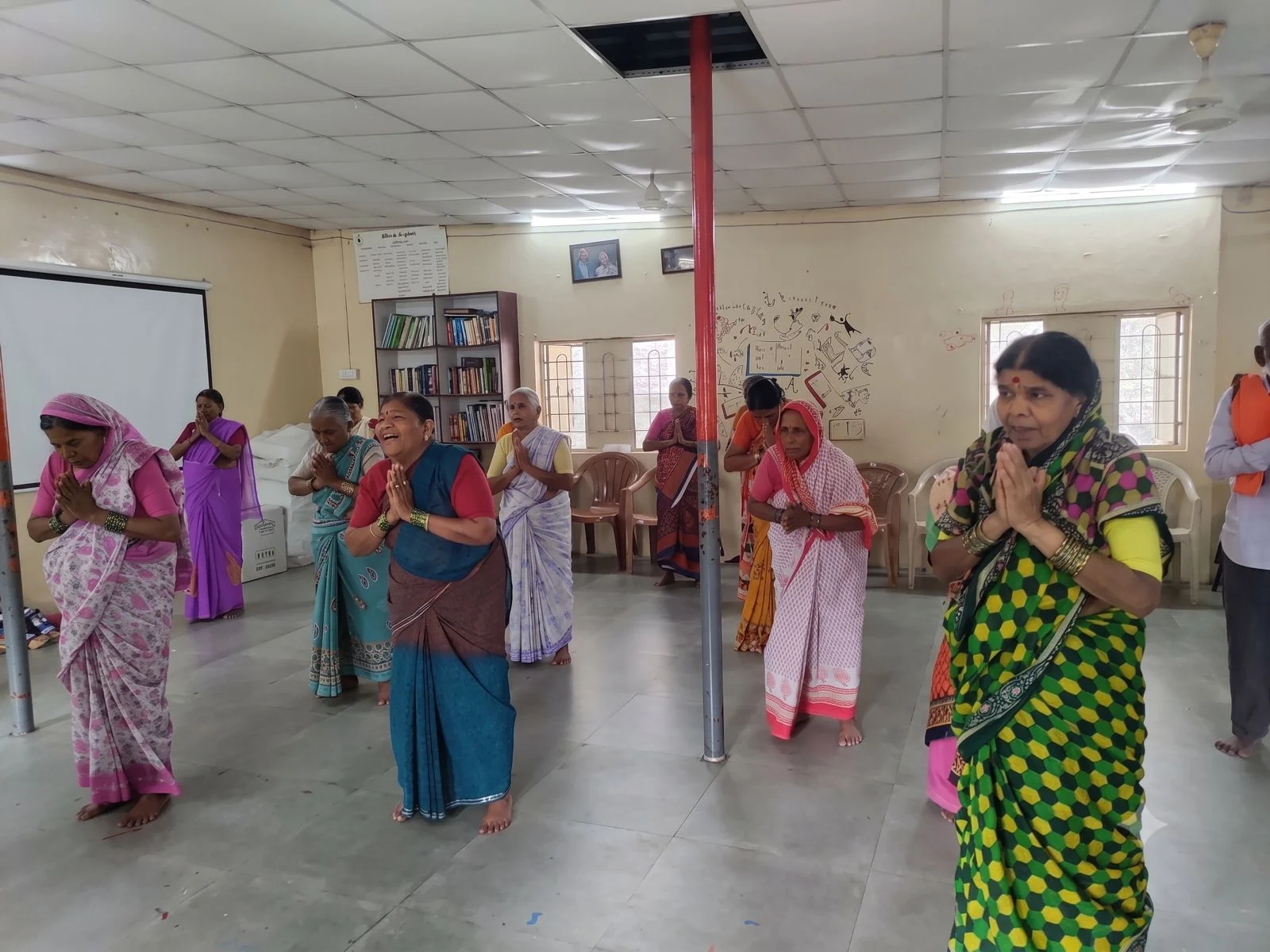
By 10:45 a.m., participants are already pouring into the Ramtekdi centre of Deep Griha Society, a good fifteen minutes before the movement therapy session is due to start. Some talk about the heat, one mentions her back pain, and another apologises for missing the last two sessions because she was out of town. Then Amruta, their instructor of three years, starts the warm-up, and immediately the room is on its feet.
The music starts and the group falls into it at once, singing along, swaying left and right, following Amruta’s steps without missing a beat. When the first song ends, the room breaks into applause, and the visitors watching from the side clap along too. A woman in the front row rests her hands on her hips and turns to us with an almost mischievous grin: “How did you like our dance?” We told her it was wonderful and that we wanted to see more. Before we could finish our request, the next song was already playing and the room was full of the sound of jingling bangles again.
After class, we sat with a few of the regulars: Laxmi ajji, Pushpa ajji, and Kusum ajji. To start off the conversation, I asked them how old they are, and they all threw their heads back and laughed. Laxmi ajji said to me in Marathi, “Who remembers how old we are?” Pushpa ajji added, “Maybe over 75? But we forget our age when we’re here,” and smiled.
Amruta has watched this group for three years, and what she describes is hard to square with the room we had just witnessed. “When we started, they needed a fifteen-minute break after every single dance. Their joints would start hurting, so we would sit down and do static choreographies instead. Most of them were out of breath by the time one song ended.”
None of that showed today. The women moved from song to song without a break. Only the men, who have started attending the sessions more recently, sat on a chair to rest from time to time. They were still dancing with their hands and singing along. After three songs, it was Amruta who had to call for a water break.
That is when they requested that “Uddein Jab Jab Zulfein Teri” be played. Amruta hesitated at first, because nobody had learned the steps for it, but finally she gave in. As the song played, the women skipped, flung their hair back, and moved through the room however they pleased. The two men who had been resting on chairs got up and joined in, trying to keep up with the steps.
That same confidence carried into the conversation afterwards. “We perform across Pune and beyond,” Kusum ajji told us. “We travel wherever there’s an event and dance freely.” She was referring to the Dance for Parkinson’s Symposium on 11 April, arranged by the Avartan Foundation, where eleven of our elderly participants performed.
Three years ago, this group needed a fifteen-minute break to get through one dance. Today they choreograph on the spot and travel across the city to perform. It became clear very quickly that while movement therapy has improved the participants’ physical health, the larger contribution may be the joy that shines through their movements, and the confidence to walk through life.
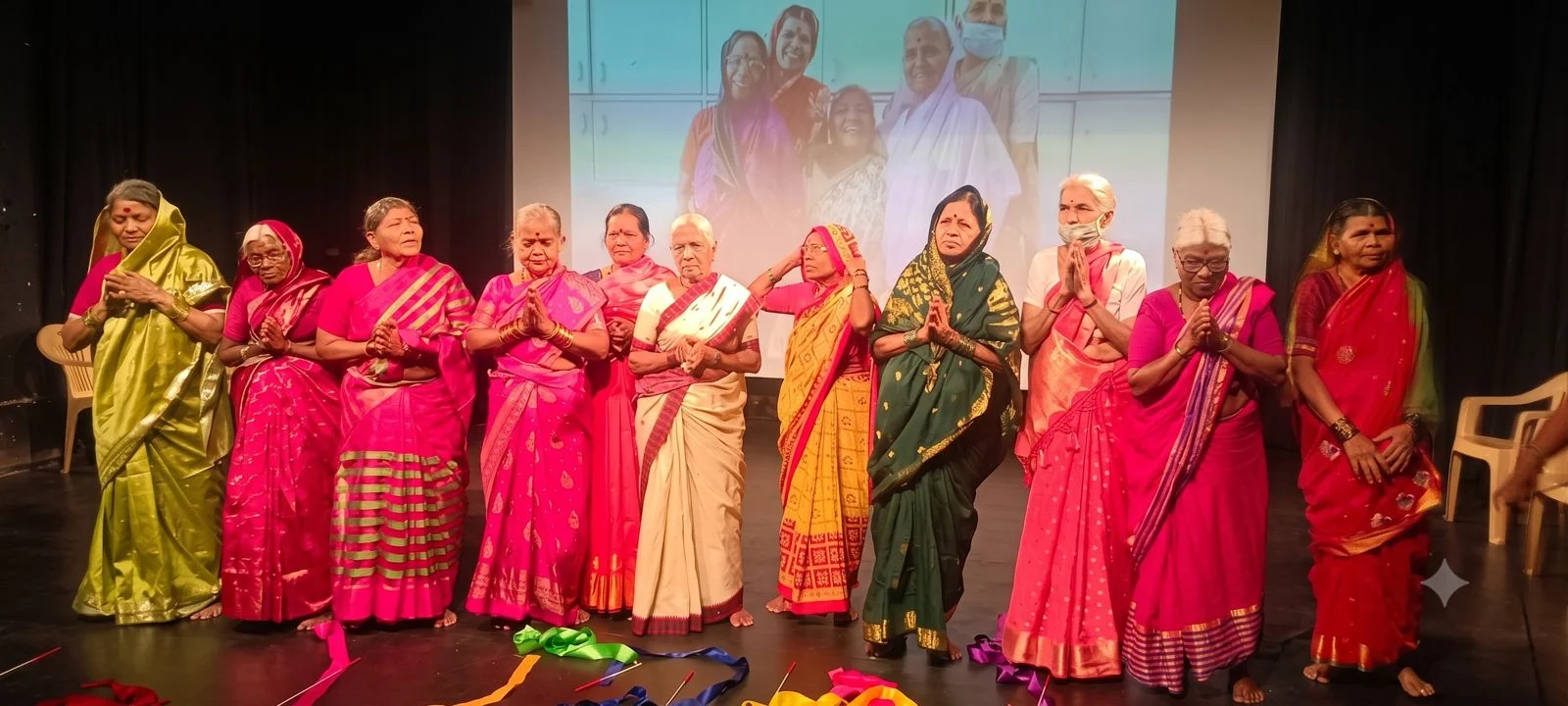
Dance for Parkinson’s Symposium
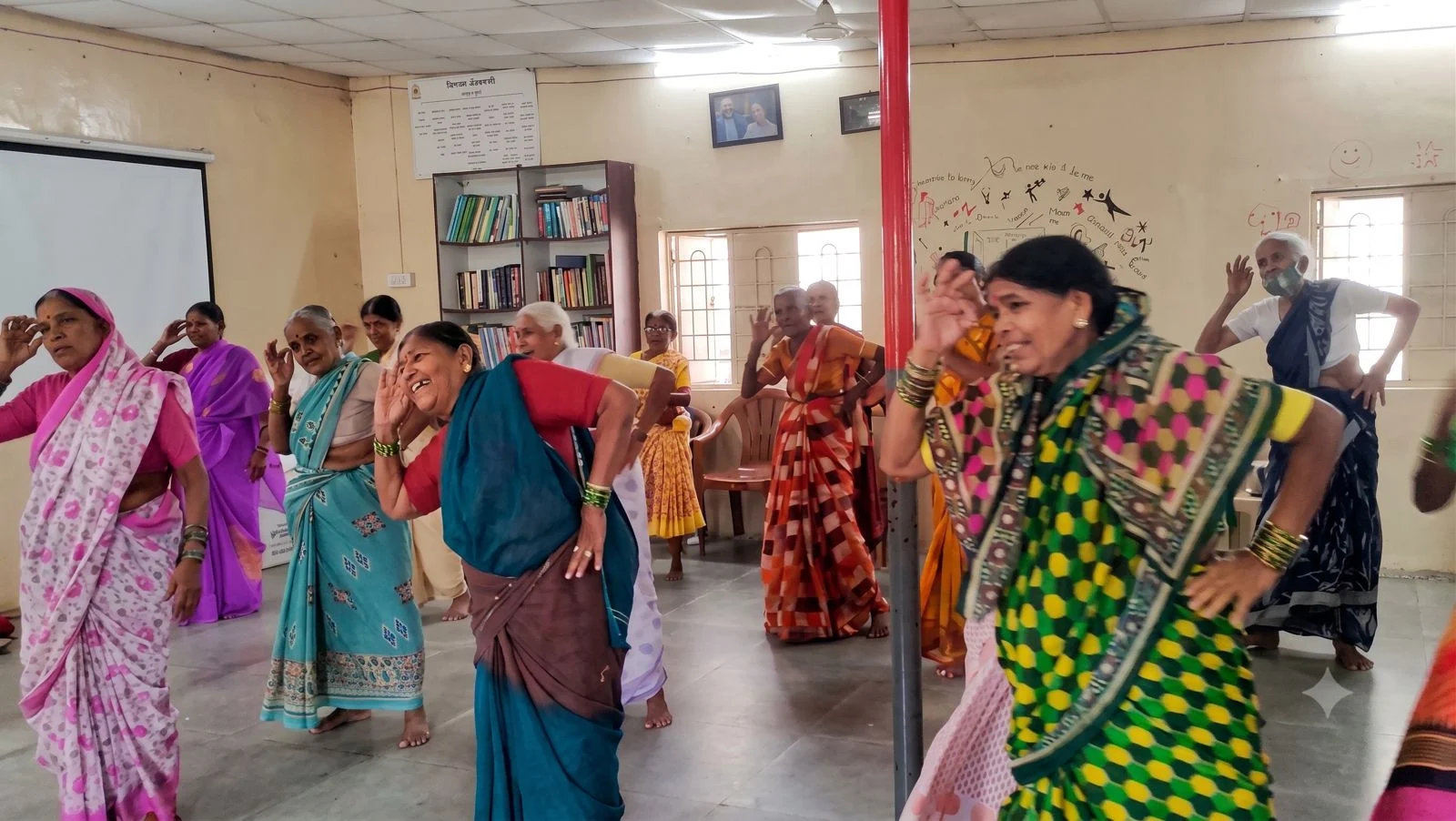
Movement Therapy at Ramtekdi